
Click the icon to the right to hear the sound bats make
(make sure your sound is on!)
Bats are one of the most challenging wildlife issues a homeowner can run into. They slip into gaps the size of a quarter, they roost in colonies of a dozen or more, and they leave behind guano that carries a serious health risk.
Critter Removal Indianapolis has handled bat removal in Indianapolis homes since 2018, using humane exclusion methods that protect the bats and permanently seal them out of your attic, walls, chimney, or living space. Our Indiana DNR-licensed team services homes and businesses within a 15-mile radius of downtown Indianapolis, including Fishers, Carmel, Noblesville, Zionsville, and Westfield.
Family-Owned & Local
Indiana DNR Certified
24/7 Emergency Service
Satisfaction Guaranteed
The first sign of a bat problem is usually a sound. Faint chirping or flapping in the attic – most often around dusk – is one of the clearest indicators something is roosting above your ceiling.
“There’s lots of different noises that can be made. It depends on if there’s one bat or a larger colony. You’ll hear chirping noises, flapping noises, usually at night when the sun starts to go down.”
If you suspect bats, dusk is the time to step outside and look at your roofline. Once the sun starts going down, the bugs come out and so do the bats, heading out to feed. From the yard, you can often see exactly where they’re exiting the home, whether that’s a gable vent, a ridge vent, a soffit corner, or a gap where the trim meets the siding.
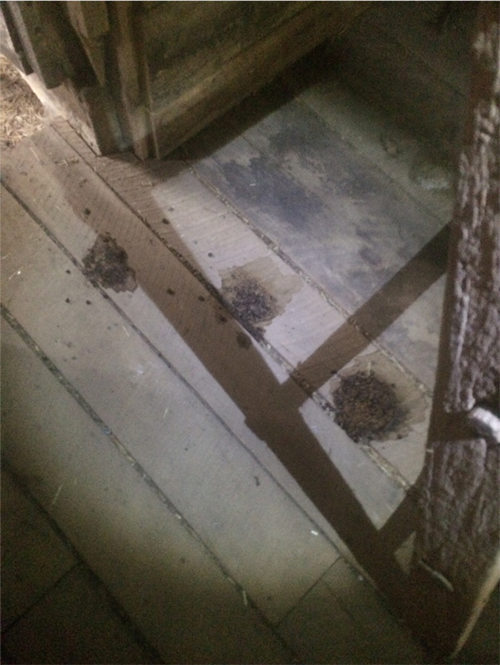
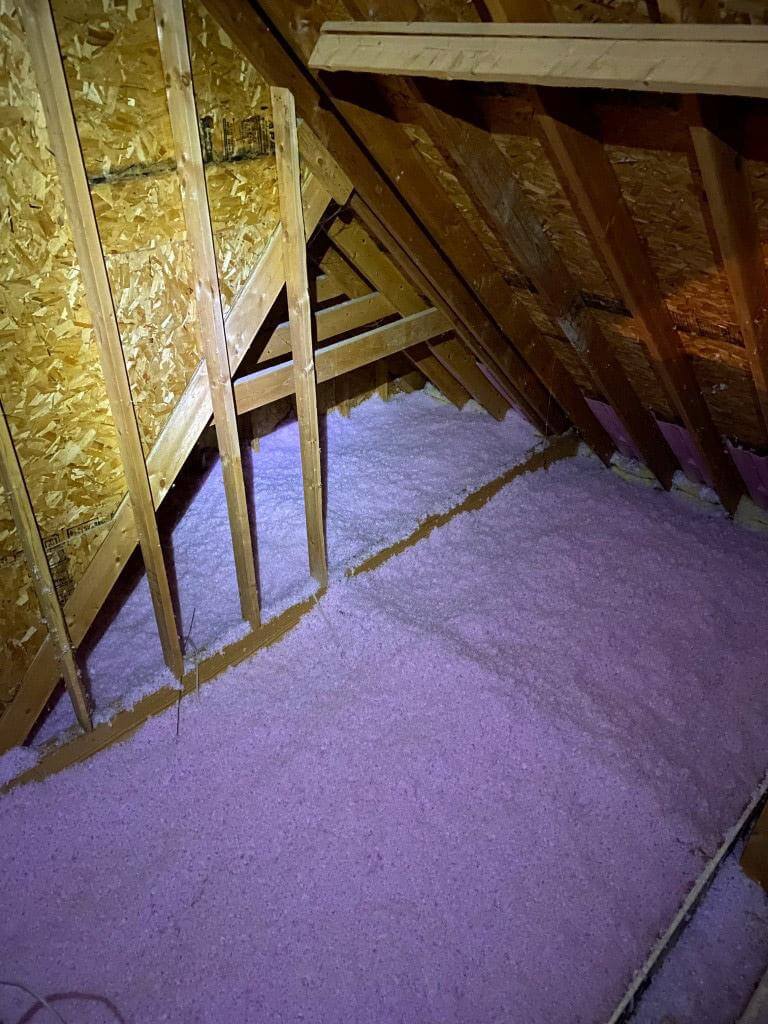
The second sign is guano. Bat droppings collect in piles directly beneath wherever the colony is roosting. Inside the attic, you’ll typically see dark accumulations on top of insulation. Outside, you might see scattered droppings on a porch, walkway, or windowsill near an entry point.
Bats are usually in the attic, but they can also turn up in basements and living spaces. In those cases, the entry point is almost always a chimney.
More often than not, if a bat is in a basement, there’s a chimney or a vent that connects down to it. Same for the living space — if a bat has ever been in a living space, we usually find that it’s because of the chimney or a door or window left open.”
It’s also worth noting that bats aren’t only a rural problem. Critter Removal Indianapolis has handled bat jobs in downtown homes, suburban subdivisions, and wooded areas alike. If a structure has a gap they can shimmy into and the airflow feels right, bats will move in – neighborhood and ZIP code don’t really factor in.
“Bats are using echolocation. If they feel ventilation coming from an attic or pick up on pheromones from a previous colony, they’re opportunists — if there’s a gap, they’ll land and shimmy in.”
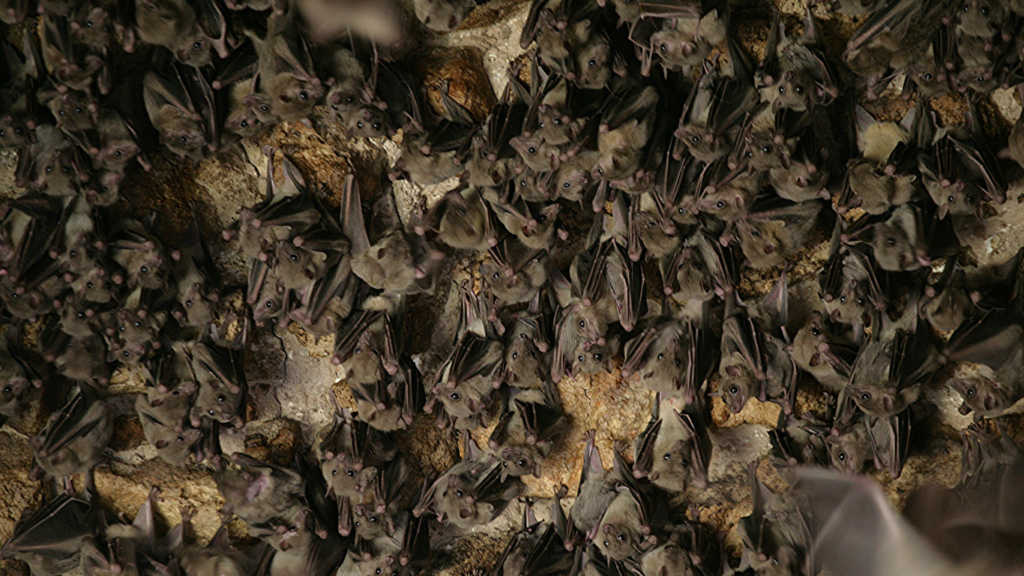
Most calls involve a small group rather than a lone bat. Colonies typically run between five and twelve, though larger groups happen. Bats roost and return to the same spots night after night, so any sign you see is rarely a one-time event.
Bats don’t tear or chew their way through homes the way raccoons and squirrels do. The damage they cause is almost entirely about what they leave behind. Their droppings accumulate in concentrated piles directly under roost spots, soak into insulation, and, over time, dry out and turn powdery.
That’s when the real concern starts. Dried guano can become airborne, work its way into HVAC ductwork, and circulate through the home. It’s also where the histoplasmosis risk comes from, which is a respiratory illness caused by inhaling fungal spores that grow in bat droppings. The longer the guano sits, the more dangerous it becomes.
“Mainly the type of damage they cause is just health hazards. If it’s fresh, it’s not as dusty or powdery — but in the long term, it can turn into more of a powder or dust, dry out, and go into your duct work. It’s That’s important to address once you see it.”
Items stored in the attic – boxes, holiday decorations, plywood subflooring – can all be contaminated by droppings that fall directly onto them. In severe cases, guano works its way through drywall ceilings, leaving staining visible from inside the living space.
The structural damage is generally indirect. Bats themselves don’t chew through wood or insulation. But the entry points they use – gaps where flashing has lifted, ridge vents that have come loose, and soffits with damaged screens – almost always need repair work as part of the exclusion.
The bat species we encounter on the vast majority of Indianapolis jobs is the brown bat, sometimes called the Indiana brown bat or the big brown bat. Other species like the federally protected Indiana bat exist in the region, but they’re rare in residential roosting situations.
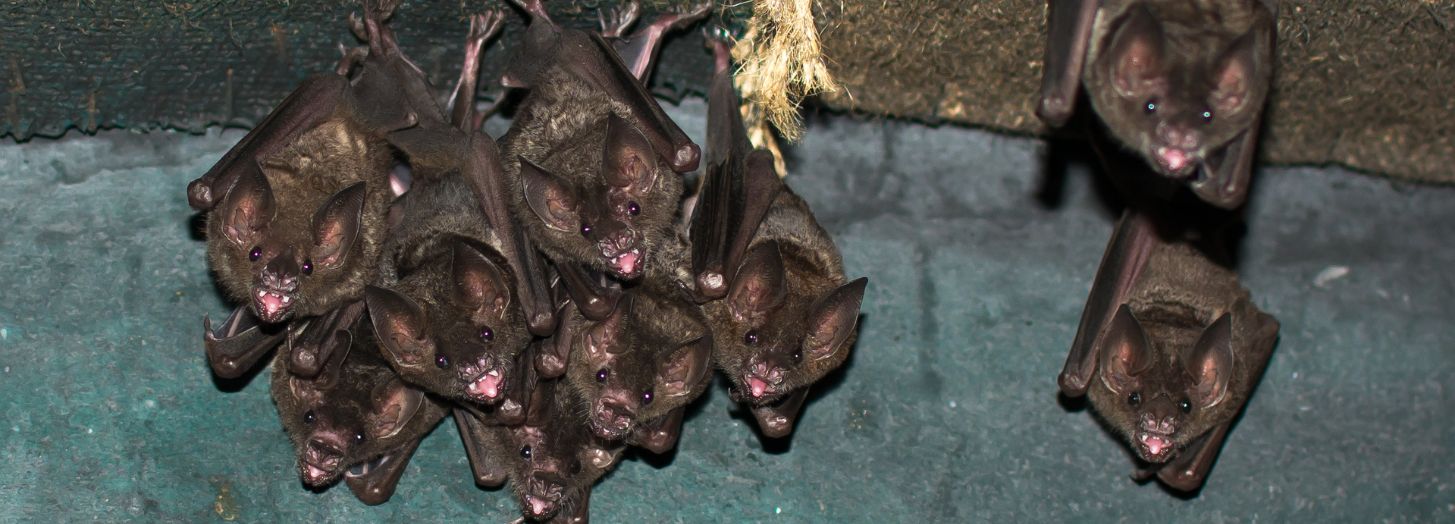
Brown bats are small. The body is only a few inches long, with brown fur, a darker pointed snout, and small visible ears. Their wingspan is much larger than the body – long, leathery, and translucent enough that the finger-bone structure shows through when the wings are extended.
Colony behavior matters because it changes how a removal job has to be done. A raccoon job typically deals with one animal, maybe a mother with kits. A bat job almost always deals with a group, which means more entry points, more guano, and a longer monitoring period to confirm every bat has left before the final seal goes on.
Bat exclusion follows the same core principle as any other wildlife exclusion job, but the execution is more meticulous. Bats fit through gaps the size of a quarter. They slip into spots that a homeowner standing in the yard would never notice – peaks, ridge vents, gable vents, soffit corners, and the seam where trim meets siding. That means our initial inspection has to be thorough.
Once we’ve identified the colony’s main entry point, we install a one-way exclusion valve: a corrugated tube fitted with mesh skirting around its base. Bats can leave through the valve to feed at dusk, but they can’t get back in. Every other opening on the home gets sealed at the same time, so the valve becomes the only way out.
The valve stays installed for several days. About a week after installation, we go back into the attic where guano has accumulated under the colony’s roost spots and place markers. A week later, we check the markers. If we see new droppings, that tells us at least one bat is still finding a way in and out, meaning we missed an opening and need to seal more gaps. If the markers stay clean, every bat has been excluded. At that point, we uninstall the valve and seal the final opening.
“Bats roost and perch in the same areas. If there’s new guano, that means there are other gaps we need to find and seal off. If there isn’t, that’s our telltale sign that all of them have been evicted.”
When the colony is in a vaulted ceiling, cathedral attic, or another spot we can’t physically access, we use trail cameras to monitor activity around the valve. Either way, we don’t seal the final entry until we’re certain every bat is on the outside.
This process takes longer than a raccoon or squirrel job – typically two to three weeks from inspection to final seal – because rushing the timeline is how bats end up sealed inside walls.
Bats in Indiana are protected. The Indiana Department of Natural Resources sets rules around when exclusion work can and cannot be done, and these rules exist for a reason: during certain windows of the year, removing adults from a colony would leave dependent young behind in the attic, where they’d die and create a much worse problem.
Two windows matter for an Indianapolis homeowner. Maternity season, in the warmer months when females are raising pups, and hibernation season in the colder months, when bats are dormant and physically unable to exit a valve. Exclusion is restricted during both. The exact dates can shift based on weather and DNR updates each year, so we work with current regulations on every job rather than relying on a fixed calendar.
“There are exclusion restrictions depending on the mating season and hibernation season. The DNR sends us update emails — we work within whatever the current window allows.”
If you call us during a restricted window, that doesn’t mean we can’t help. We can inspect the home, identify entry points, document the colony, and schedule the exclusion for the next legal window. For active health concerns – like a bat that’s gotten into a living space – we have other options that don’t involve excluding the full colony.
Bat bugs are a small but real issue that sometimes shows up alongside a bat colony. They’re closely related to bed bugs, look nearly identical at a glance, and feed on the blood of bats, but they’ll bite humans when their primary host is gone. That’s actually when bat bugs tend to become a homeowner problem: after the bats have left or been excluded, the bugs migrate down from the attic looking for a new blood source.
Bat bug infestations aren’t extremely common, but they happen often enough that we can treat them as a companion issue to any bat removal job if needed. Treatment is handled separately through our pest control side because it requires different products and a different approach than the exclusion work itself.
If you’ve had bats – or you suspect you have – it’s worth checking for bat bugs as well. They’re easy to mistake for bed bugs, and homeowners often spend time and money on the wrong treatment before realizing what they’re actually dealing with. Learn more about our bat bug pest control in Indianapolis.
Had bats? You may also have bat bugs.
Bat removal is only half the job. The guano left behind is contaminated, structurally damaging to insulation, and a long-term health hazard. Whether the cleanup is a spot remediation or a full attic restoration depends entirely on how much guano is present and how spread out it is.
If the droppings are confined to one or two distinct piles directly under a roost spot, we can spot-clean those areas, decontaminate the surrounding insulation, and apply a deodorizing and disinfecting treatment without removing the full attic floor.
When the guano is mixed through the insulation or spread across multiple areas, spot cleaning isn’t enough. In those cases, we remove and replace all contaminated insulation, run HEPA filtration to clean the air, and apply full disinfecting and deodorizing treatments before installing new blown-in insulation. This is the most labor-intensive part of any bat job and typically takes two to seven days on its own. See our full attic and crawlspace waste cleanup service for more on the remediation process.
When it gets mixed through the attic, or there are more than two piles, that’s when it’s probably best to just do a full insulation removal and replacement. Sometimes we don’t see the full amount of guano until after the end of the exclusion.”
Deodorizing is more important than it sounds. The scent of past animals attracts new ones – bats and other wildlife – back to the same entry points. Leaving the smell behind effectively invites the next colony.
The two most common mistakes we see homeowners make on bat jobs are sealing the wrong gaps and installing bat houses incorrectly.
Sealing entry points sounds straightforward until you realize bats use gaps the size of a quarter. Homeowners fill the obvious hole, leave the small one next to it because “nothing could fit through there,” and the colony keeps coming and going through the gap they missed. Worse, when a homeowner seals every gap including the active entry point while bats are still inside, the colony gets trapped in the walls or attic. That’s how a manageable exclusion becomes a guano remediation and structural repair job.
Bat houses are the other common DIY misstep. The intent is good: give the bats somewhere else to roost and they’ll leave your attic alone. The problem is placement. We see bat houses installed at the wrong height, in the wrong sun exposure, or – most often – mounted directly on the homeowner’s siding, which keeps the colony right next to the same entry points that started the problem.
There’s also the legal side. Because bats are protected in Indiana, removing them outside of legal windows or without DNR-compliant exclusion methods can carry penalties. Our team handles the regulatory side as part of the job.
Bat removal pricing depends on a handful of variables, and we provide fixed-price quotes after the initial inspection so there are no surprises mid-job. The main factors:
For a baseline cost reference, bat removal pricing in Indianapolis typically falls in a defined range outlined on our dedicated bat removal cost page.
We’ve been handling bat jobs in the Indianapolis area since 2018. The team is Indiana DNR-licensed, BBB-accredited with an A+ rating, and rated 4.9 stars across more than 415 Google reviews. Every quote is a fixed price with no add-ons mid-job, every job is backed by a satisfaction guarantee, and our typical lead time from first call to inspection is around two days.
We’re available 24/7 because bat problems rarely surface during business hours. A bat in a bedroom at 2 a.m., a colony emerging from a soffit at dusk, an odor working its way down from the attic – those calls come in when they come in, and we’re set up to take them.
We don’t recommend it. Bats are protected in Indiana, so removing them outside of DNR-approved windows or methods can carry legal penalties. Beyond the legal side, attempting DIY exclusion almost always ends one of two ways: gaps left unsealed and the colony still coming and going, or every gap sealed at once and the colony trapped inside the walls. Both make the eventual professional job significantly more expensive.
Indiana DNR restricts bat exclusion during maternity season in the warmer months and during hibernation in the colder months. The exact windows shift slightly each year. We schedule exclusions for whenever the current legal window allows, and during a restricted period we can still inspect, document, and pre-plan the job.
Pricing depends on home size, colony size, number of entry points, and whether guano remediation is needed. We provide a fixed-price quote after the initial inspection. Our dedicated bat removal cost page covers typical pricing in more detail.
Once every entry point is sealed, the original colony can’t get back in – that’s the whole point of exclusion. The risk that does exist is from new openings created later: a new roof installed without wildlife-prevention in mind, storm damage to flashing, or other wildlife like squirrels or raccoons creating new entry points that bats then exploit. A periodic exterior inspection catches those before they turn into a new colony.
No. We handle bat jobs in downtown Indianapolis homes, suburban subdivisions, and wooded properties alike. Bats follow airflow and accessible gaps, not geography.
Critter Removal Indianapolis operates from 4998 Riverview Drive and serves homes and businesses within a 15-mile radius of downtown Indianapolis, including Fishers, Carmel, Noblesville, Zionsville, Westfield, and the surrounding communities. We’re open 24/7 for bat emergencies and bat-in-living-space situations.


Don’t let bats disrupt your peace of mind any longer. For professional bat removal services in Indianapolis, Indiana, contact Critter Removal. Our certified experts are ready to address your bat issues promptly and effectively.