
Critter Removal Indianapolis is a family-owned wildlife company, and our approach to rat removal in Indianapolis is simple: we remove the rats that are inside and seal the entry points and burrows they use, so new rats cannot move in behind them. Fall is when rats are most active in homes. Cooler weather and the harvest of fields around the metro push rats toward homes, garages, and crawl spaces to stockpile food for winter.
We provide humane rat removal across greater Indianapolis, including same-day and emergency rat removal when rats are already inside.
Click the icon to the right to hear the sound rats make
(make sure your sound is on!)
Family-Owned & Local
Indiana DNR Certified
24/7 Emergency Service
Satisfaction Guaranteed
Most rat calls start with a noise in the walls, ceiling, or crawl space at night. The physical signs below are what confirm it’s rats and not mice or squirrels.
Rat droppings are about three-quarters of an inch long with blunt ends, and they collect along walls, in cabinets, and near stored food. Mouse droppings are closer to the size of a grain of rice.
Rats chew constantly to keep their teeth worn down. Look for rough, oversized gnaw marks on wood trim, door corners, plastic pipes, storage bins, and wiring.
Norway rats are diggers. Holes about two to four inches across along the foundation, under a slab, deck, or shed, or beneath a woodpile are a common sign that rats are living close to the house.
Rats travel the same routes every night, and the oil in their fur leaves dark smudges along walls, beams, pipes, and the edges of entry holes. A worn, greasy runway means a regular route, not a passing visitor.
From our technicians: “In Indianapolis, Norway rats are by far the more common species we deal with. Roof rats are much less common in central Indiana, so we don’t assume attic activity means roof rats — we always confirm the species before recommending treatment.”
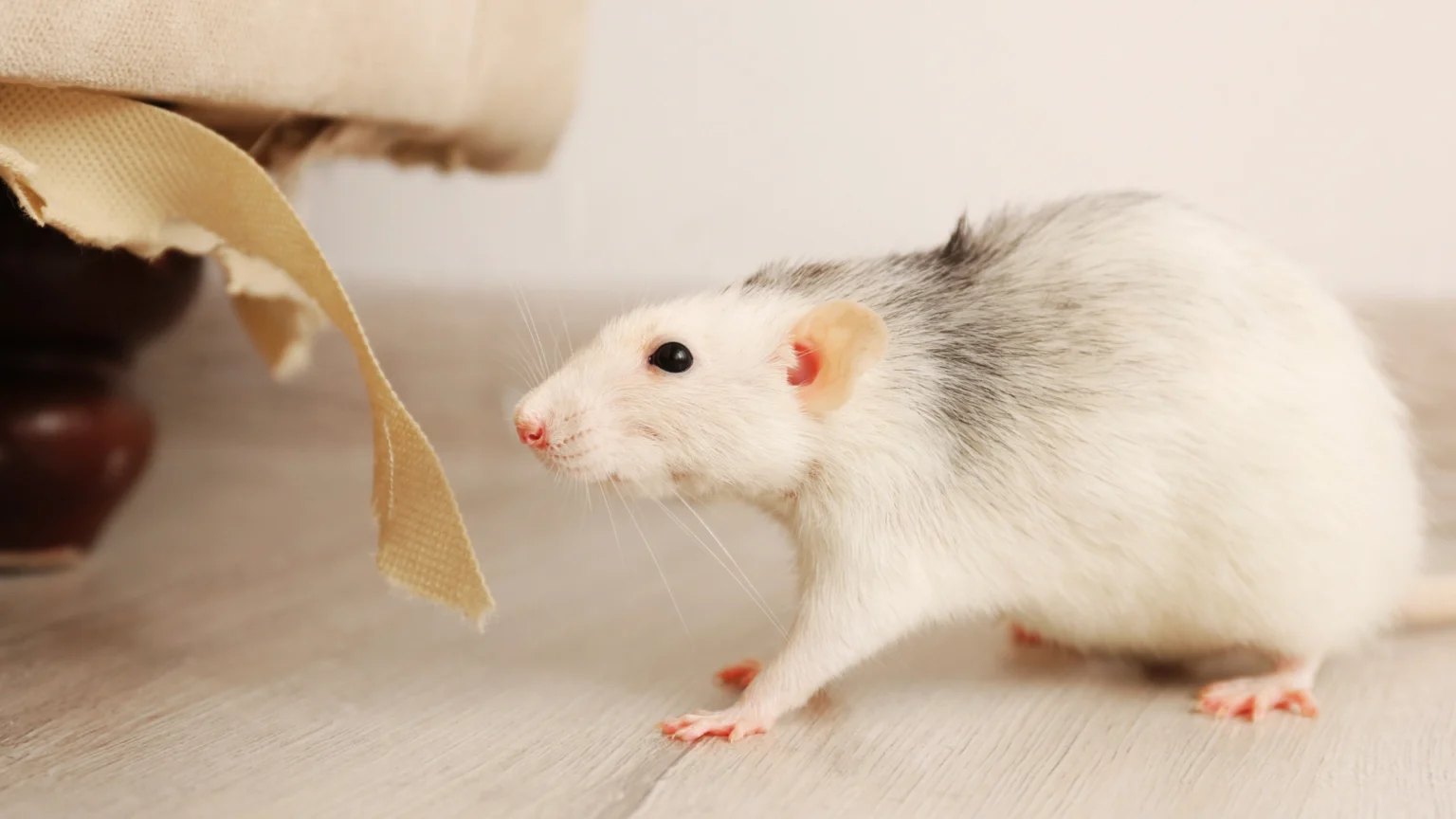
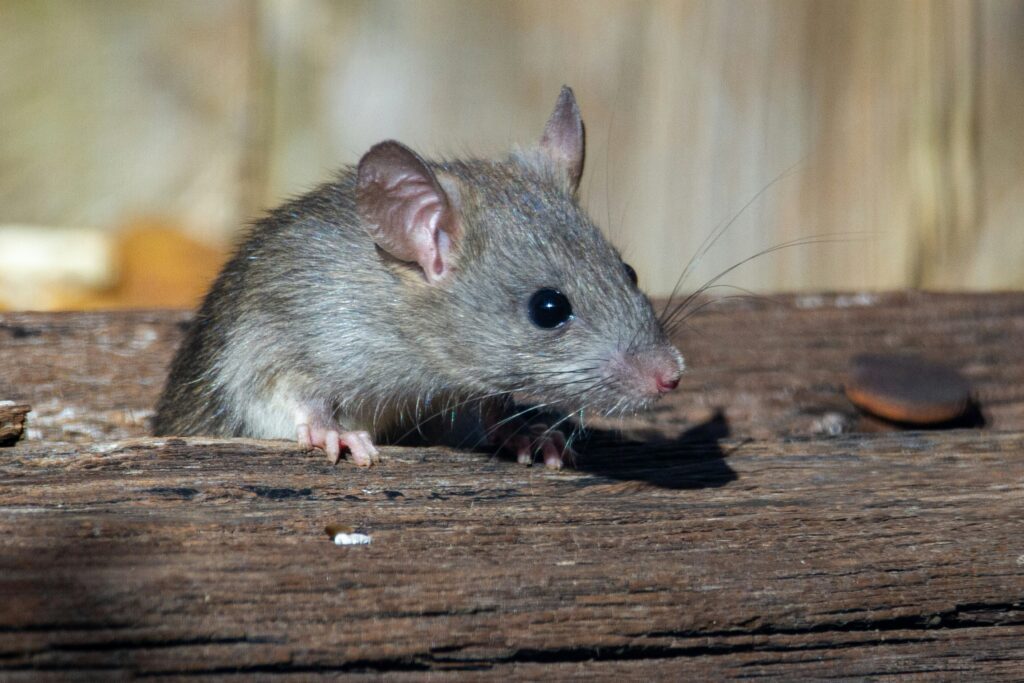
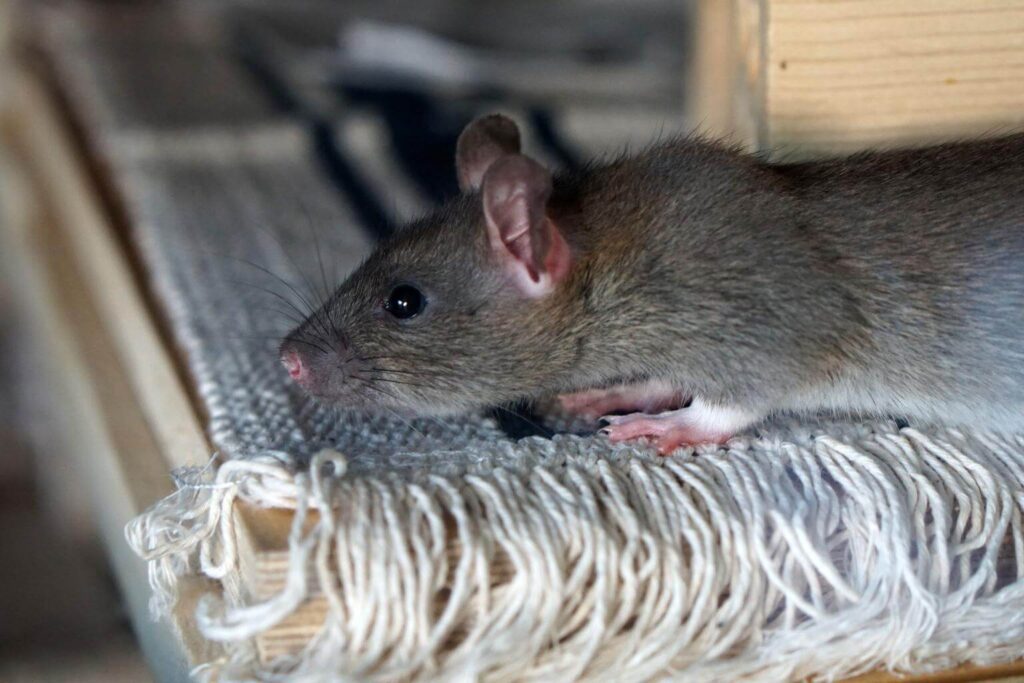
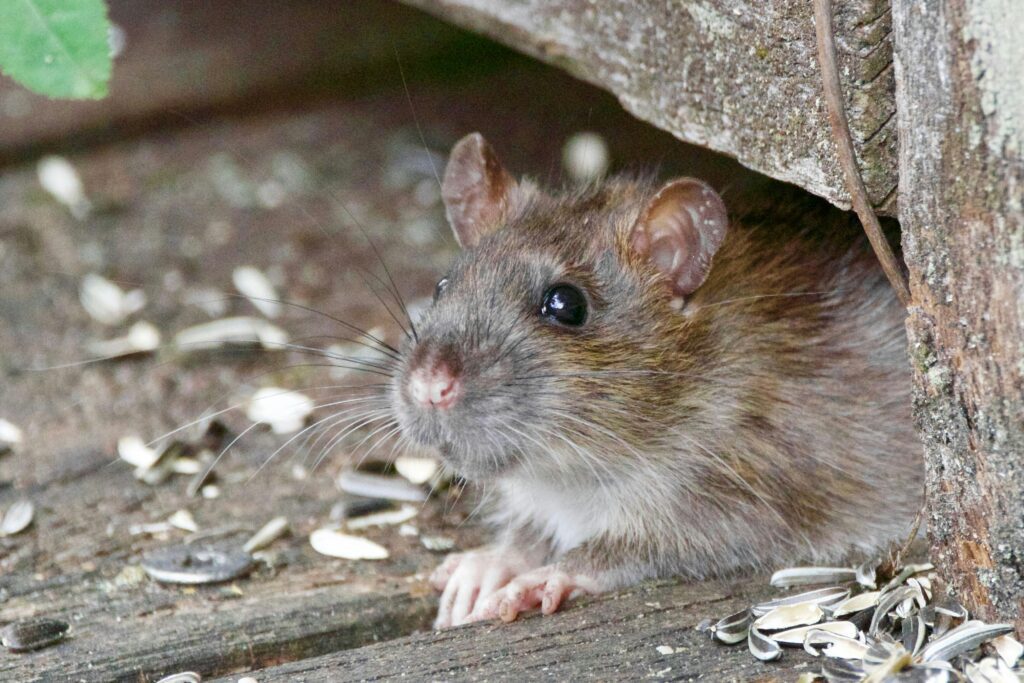
The Norway rat is strong, aggressive, and able to adapt to cold climates. Rat muzzles are blunt, and their bodies look thick and heavy. Rat tails are 6 to 9 inches long, scaly, and nearly naked. Their life expectancy is 9 to 12 months.
These rodents are incredibly adaptable and will find any way they can to get to your home’s shelter, food, and water. Whether that means chewing through walls, wiring, and even pipes, or finding a hole that already exists, rodents will do everything they can to invade your home. For these reasons, you should get rat removal help before it becomes a problem for you.
Rats are the larger, bolder side of rodent removal in Indianapolis, and the job looks different from a mouse job: bigger entry points, burrows outside the home, and colonies that guard a food cache. If the droppings are rice-sized and the gaps are tiny, the problem is more likely mice, which our mouse removal team in Indianapolis handles with the same exclusion-first approach.
Rats do not hibernate, so fall is when they lock in shelter close to a reliable food source. In central Indiana, that shift lines up with harvest season. When the corn and soybean fields around the metro come down, rats lose food and cover at the same time the temperature drops, and garages, crawl spaces, basements, and wall voids become the next best option.
From our technicians: “We typically see calls for rat control in Indianapolis increase around September and October as temperatures drop and rodents look for reliable food and shelter. Older homes can have more structural gaps, while newer developments near farm fields see more activity as the surrounding land is disturbed.”
Once inside, rats carry food back to a hidden cache. Pet food, birdseed, grass seed, and pantry goods stored in a garage or basement are frequent targets. A cache gives the colony a reason to stay and keeps them using the same entry point.
A Norway rat can have several litters a year once it has warm shelter and steady food. Rats that move in during the fall can keep breeding through the winter, which is why a fall inspection is a smaller job than a spring cleanup.
An adult Norway rat can squeeze through a gap about the size of a quarter, and it will chew a small gap to make it larger. Norway rats live at ground level, so most entry points sit low on the home:
Rat control only lasts when the openings are closed. Trapping without sealing is a seasonal fix: The rats inside are gone, but the gaps that let them in are still there for the next ones. Here is how we handle it from the first call to the final seal.
We walk the full perimeter of the home to find burrows, runways, droppings, and every entry point, then check the garage, basement, crawl space, and attic as needed.
We send photos and pricing digitally. The price is fixed and return visits are included, so there are no surprise charges.
We set traps where rats are active inside and place locking bait stations outside the home, out of reach of children and pets.
We seal openings with materials rats cannot chew through, such as corrugated steel mesh and flashing, and treat burrows along the foundation so they cannot be reopened. Simply filling a hole with dirt isn’t enough — rats can dig right back through it. We seal burrows with durable materials like galvanized steel mesh, flashing, or compacted stone so the same burrow can’t be reopened. This permanent rat exclusion step is what keeps new rats from moving in.
We return to check traps, monitor activity, and confirm the home stays sealed. If a rat gets back in through a sealed point, we fix it at no extra cost.
From our technicians: “We don’t consider a problem resolved just because a trap hasn’t caught anything for a day or two. We look for multiple signs that activity has stopped — no fresh droppings, no new burrowing, lower bait ingestion, and no continued sightings.”
Rats contaminate everything they cross with urine and droppings. They are linked to diseases such as leptospirosis and salmonella, and the waste they leave in insulation, crawl spaces, and storage areas needs proper cleanup, not just a sweep. Heavy contamination often calls for attic and crawl space waste cleanup once the rats are out.
From our technicians: “A rat problem left unnoticed in an attic can lead to $15,000 or more in repairs — burrowing through insulation, contaminating it with urine and droppings, and chewing electrical wiring. In severe cases the entire attic needs remediation and new insulation.”w burrowing, lower bait ingestion, and no continued sightings.”
A rat’s front teeth never stop growing, so it gnaws on whatever is in reach. Chewed electrical wiring in walls, attics, and garages is a fire risk, and rats also damage plastic water lines, ductwork, and insulation.
A rat problem left unnoticed in an attic can lead to $15,000 or more in repairs — burrowing through insulation, contaminating it with urine and droppings, and chewing electrical wiring. In severe cases the entire attic needs remediation and new insulation.
Rats already inside? We offer same-day and emergency rat removal across Indianapolis.
Poison on its own does not stop rats from getting in. The openings stay open, so new rats replace the ones that are gone. A rat that eats poison inside the home can also die in a wall or ceiling, where the odor lingers for weeks. Bait stations have a place in a complete plan, but sealing the home is what keeps rats out.
From our technicians: “The first step is to draw rats out before patching their openings. Timing is critical — sealing too early can trap rats inside the home and create additional damage. We rely on responsible bait placement, ongoing monitoring, and properly timed exclusion.”
Humane wildlife management means using responsible methods that minimize unnecessary suffering, even when lethal control is necessary. We focus on targeted trapping, careful bait placement, and permanent exclusion rather than relying on poison alone — resolving the problem while reducing risk to pets, children, and other wildlife.
Once rats have been removed from your home, eliminating food and shelter is just as important as sealing the entry points. Keep garbage secured, avoid leaving pet food outside, clean up spilled birdseed, trim overgrown vegetation, and address standing water. Rats are opportunistic — making your property less attractive goes a long way.
Every rat job is different, so we quote a fixed price after the inspection. These are the factors that move the price.
A home with one or two gaps at the foundation is a simpler job than one with openings around utilities, vents, and the garage.
Active burrows under a slab, porch, or shed add exclusion work beyond sealing the house itself.
Slab homes, crawl spaces, and basements each have different weak points, and older homes tend to have more settled gaps.
A few weeks of activity is a smaller job. Months of activity means more damage, more droppings, and possibly insulation cleanup. The sooner you call, the less it costs.


Our team consists of certified experts with extensive knowledge of rat behavior and effective removal techniques.
We stand by the effectiveness of our services with a guarantee for a fixed price. No hidden fees or surprises.
We excel in trapping and removing rats quickly and effectively.
Serving Indianapolis and the surrounding areas, we have an in-depth understanding of rat challenges specific to this region.
When you reach out to us, you can expect a swift and efficient response to address your rat issues.
Our experienced team will safely and effectively remove rats from your property.
We use expert extermination techniques to ensure the removal of rats and prevent reinfestation.
We’ll repair any damage caused by rats and restore your property to its best condition.
Prevent future rat infestations with our wildlife-proofing services.
Rat calls come from across the metro, from older homes with settled foundations near downtown to newer subdivisions that border farm fields on the edges of the service area.
We serve a 15-mile radius from downtown Indianapolis, covering Marion County and surrounding suburbs, including Boone, Hamilton, Hancock, Hendricks, and Johnson counties.



We can often arrive the same day, and usually within one to two days. If you are hearing rats at night or finding droppings, the sooner we see your home, the smaller the job.
Store-bought traps and poison can catch a few rats, but they do not find or seal the entry points, so rats will return. A professional job traps the active rats and closes the home so new ones cannot get in.
Rats leave signs outside the home as well as inside, including burrows along the foundation and grease marks around entry holes. Mice rarely burrow, and their droppings and gnaw marks are much smaller.
Falling temperatures and the harvest of nearby fields take away outdoor food and cover at the same time, so rats move toward homes to shelter and store food for winter.
That is exactly what our process is built to prevent. We don’t stop at trapping — we reduce the active population, then seal the entry points and burrows rats were using so new ones can’t move into the same openings. Because rats are persistent and conditions around a home change with the seasons, we also offer ongoing, subscription-based monitoring and bait station maintenance. If activity returns, we come back out to reassess and address it as part of that ongoing service, so a solved problem stays solved.
Yes. Droppings, urine, and nesting material are removed and the area is sanitized. Heavy contamination in insulation may need full removal and replacement.
Yes. Businesses are covered through our commercial rat and mice control service.
Most straightforward rat problems take a few weeks to fully resolve, though larger populations or complicated entry points can extend that. We begin with an inspection, build a treatment and exclusion plan, and schedule follow-up visits to monitor activity along the way. We also don’t call a job finished just because a trap hasn’t caught anything for a day or two. We look for several signs that activity has truly stopped — no fresh droppings, no new burrowing, lower bait ingestion, and no continued sightings — before we consider the home clear.
Rats in attic spaces are a common call here, but in Indianapolis they are almost always Norway rats that climbed up from a lower entry point rather than true roof rats. Because roof rat removal is rarely needed in central Indiana, we never assume activity overhead means roof rats — we confirm the species first, since how a rat reaches your attic changes where we set traps and where we seal. If you are hearing scratching above the ceiling, an inspection tells us exactly what is up there and how it got in.
Rat proofing is two things working together: sealing the entry points and burrows rats are using, and removing the food and shelter that drew them in. On our end that means durable exclusion with materials rats cannot chew through. On yours it means securing garbage, keeping pet food indoors, cleaning up spilled birdseed, trimming back vegetation, and clearing clutter along the foundation. Sealing and prevention together are what keep a solved rat problem from returning.
AVAILABLE 24/7 • NO HIDDEN FEES
Don’t let rats disrupt your peace of mind any longer. For professional rat removal services in Indianapolis, Indiana, and the surrounding areas, contact Critter Removal. Our certified experts are ready to address your rat issues promptly and effectively.