
Click the icon to the right to hear the sound raccoons make
(make sure your sound is on!)
Family-Owned & Local
Indiana DNR Certified
24/7 Emergency Service
Satisfaction Guaranteed
Raccoons have heavier footsteps — it almost sounds like a person walking above you. You’ll hear them more in the evening and throughout the night.
Raccoons can rip into weak spots around soffits, vents, and rooflines, often creating visible damage outside your home.
Dirt marks, oily stains, and paw prints near openings often reveal repeated entry points used by raccoons.
Even large raccoons can squeeze through surprisingly small gaps if they’re determined to get inside.
From our technicians: When we get new calls, we go down the line — when do you hear the noises? What do they sound like? Heavy footsteps and chittering at night is almost always raccoons. Pitter-pattering and chewing during the day is usually squirrels. Most of the time, homeowners don’t really know what they’re dealing with. We ask specialized filter questions to give our technicians a preemptive idea of what they’re going to need to be looking for.
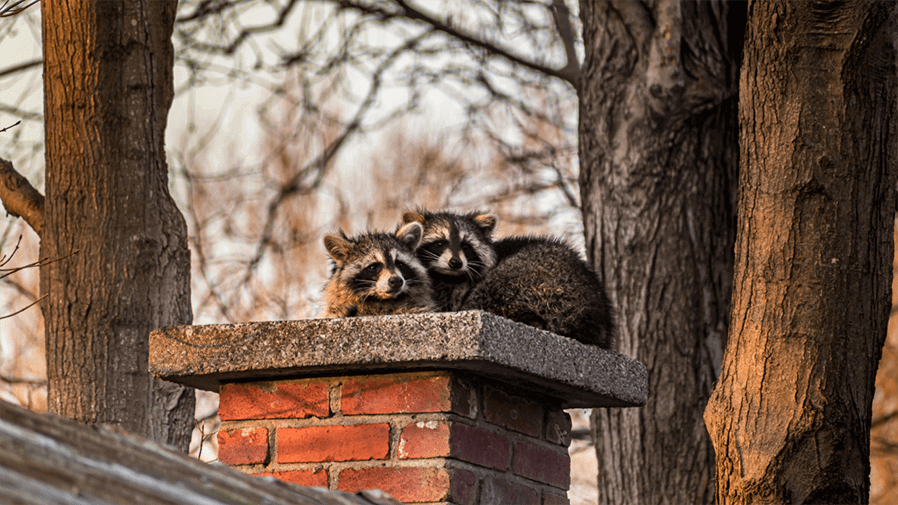
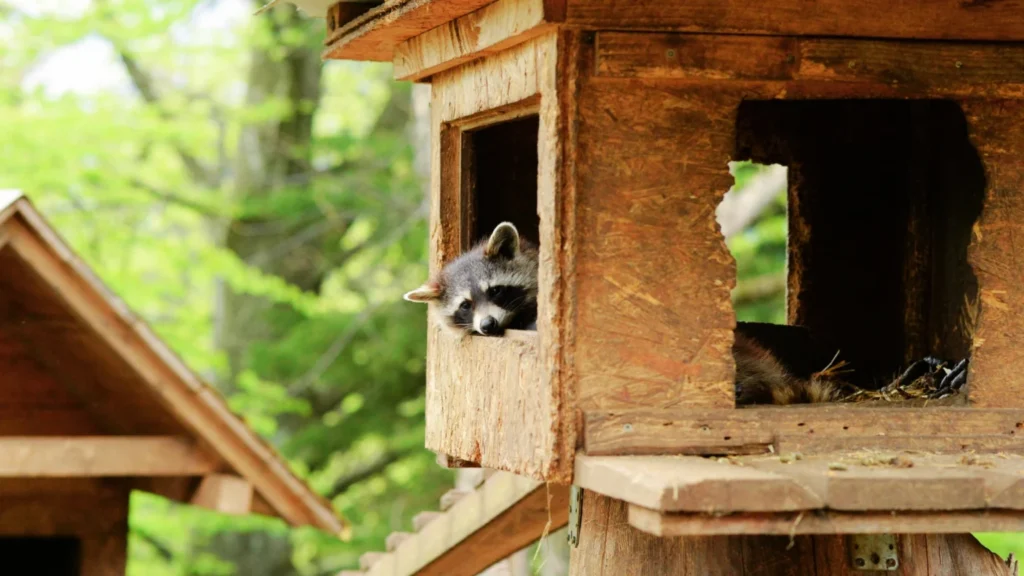
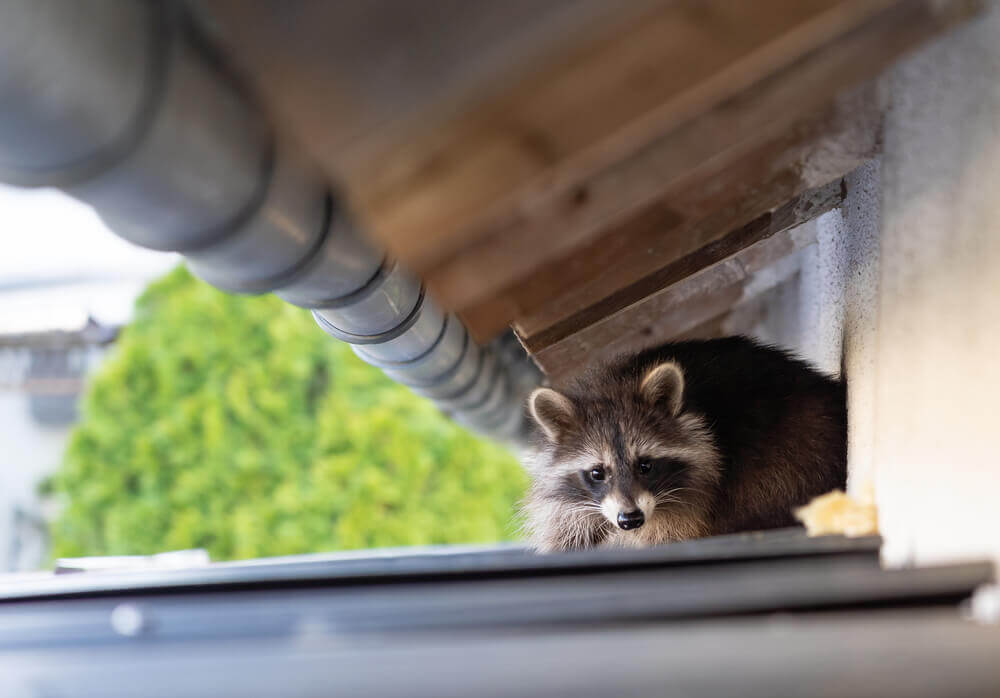
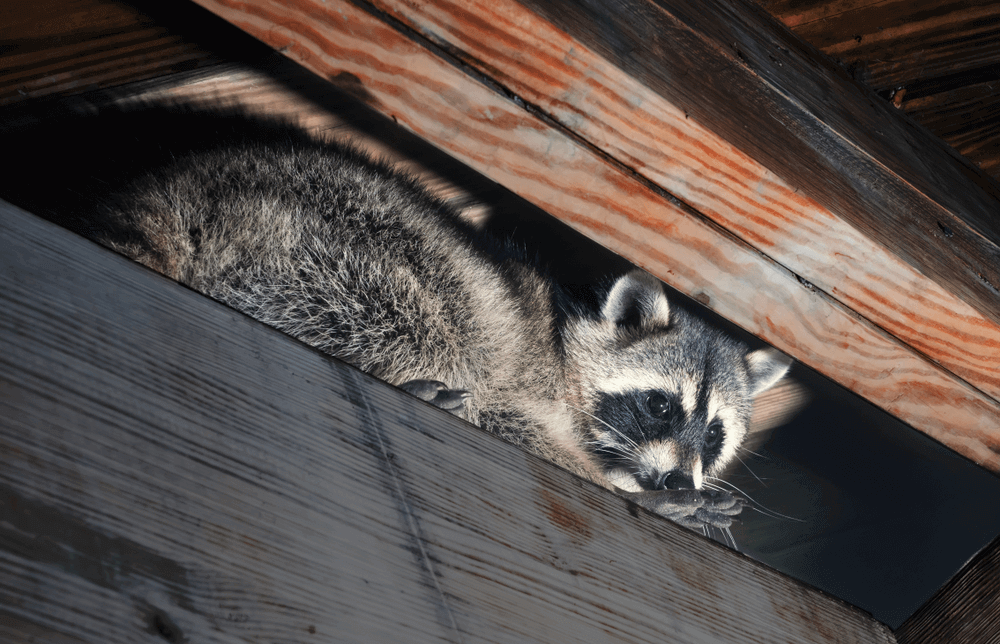
The problem starts from the outside, so the project’s done from the outside. Here’s what that looks like from first call to final seal.
We walk the exterior of your home to find entry points and signs of activity. In most cases, we don’t need to enter the attic to diagnose the issue.
Same day when possible, next day at the latest
We send photos and pricing digitally. What you see is what you pay — everything from follow-ups to return visits is included.
We keep our pricing fixed for our customers so there’s no sticker shock.
We install one-way devices so raccoons can leave safely, but can’t get back inside your home.
No trapping required
We re-check your home, seal any remaining vulnerable areas, and remove the exclusion device once activity is gone.
Average 6-8+ visits and adjustment periods
We stand behind our work with a warranty. If raccoons return, we come back and fix it at no additional cost.
Longer warranties available
From our technicians: People often ask how we remove raccoons — the truth is, they remove themselves. We simply guide them out and make sure they can’t get back in. It’s like changing the locks while they’re out.
Raccoon feces contain Baylisascaris (raccoon roundworm) — a serious parasitic hazard that can affect humans and pets. Many homeowners aren’t comfortable entering attics — and they shouldn’t be. This isn’t a DIY cleanup job.
Every project is different. We quote a fixed price upfront after inspection — no hidden fees, no surprises. Here’s what’s always included and what affects your cost.
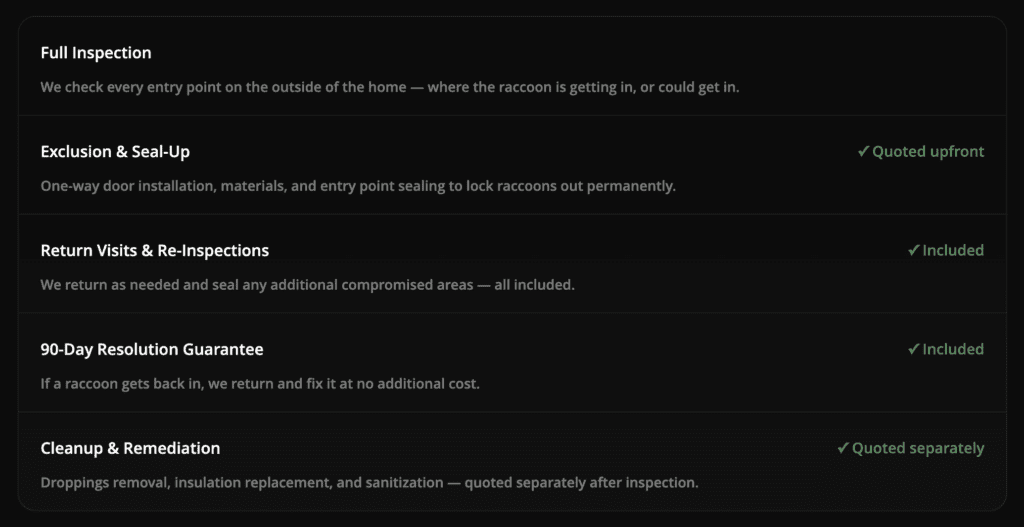
A one-story ranch is completely different from a three-story downtown Indy home with Victorian molding or a slate roof. Height, access, and roofing materials all factor in.
From our technicians: The biggest factor is the type of home and how long the raccoons have been there. A single-entry exclusion on a ranch home is straightforward. A three-story downtown Indy home that needs two technicians and three ladders — that’s a very different job. And if they’ve been in the attic for months, you’re looking at insulation replacement and possibly structural repair. That’s why we always say: the sooner you call, the less it costs.
Insurance may cover raccoon damage. Full remediations — where we’re removing all the insulation and putting it back in — those can be covered under homeowner’s insurance. It depends on the policy, but it can significantly reduce your out-of-pocket cost. We can help you figure out what your coverage looks like.


Customers often come to us for second opinions after being quoted thousands for unnecessary work. We focus on honest assessments and only recommend what’s truly needed.
Spring means baby season. Watch our technician gently remove raccoon kits from a local attic — and see why timing matters.
During spring baby season, the jobs get more complex. A lot of the time it’s more of an interior manual removal of the kits, whereas we never really have to do that any other time of the year — it’s all done from the outside. We always reunite babies with their mothers when possible and seal the home so it doesn’t happen again.
A lot of Indianapolis homes are 50+ years old — older, historic homes with Victorian molding, slate roofs, clay tile roofs, and tighter neighborhoods where homes are close together. If the upkeep hasn’t been there, those homes are prime opportunity for raccoons. On the north and northeast side — Fishers, Carmel, Westfield — it’s newer builds and subdivisions, but they have their own issues: natural separation points in how the homes were built that wildlife can exploit. People aren’t building homes to keep wildlife out.
We serve a 15-mile radius from downtown Indianapolis, covering Marion County and surrounding suburbs.



Sometimes the same day, if the homeowner doesn’t need to be there for the inspection. Ideally next day, or two days at the latest. Most of the time, if people are calling us, it’s because they’re ready — there’s noises keeping them awake at night. The quicker we can get out there, the better.
Red squirrels can chew back in within two hours — a very different challenge
AVAILABLE 24/7 • NO HIDDEN FEES