
Expert Paper Wasp, Yellowjacket, Bald-Faced Hornet, and Mud Dauber Pest Control
Family-Owned & Local
Indiana DNR Certified
24/7 Emergency Service
Satisfaction Guaranteed
Unlike bees, wasps and hornets are not major pollinators – and they tend to be more aggressive, especially when defending their nests. When these stinging insects build nests near homes, they pose serious safety risks, particularly for children, pets, and individuals with allergies. Wasp and hornet infestations are commonly found in attics, wall voids, under roof eaves, inside sheds, and even underground.
Wasps and hornets typically enter homes and structures through small cracks in siding, roof eaves, soffits, vents, or gaps around windows and doors.
Wasps and hornets are drawn to protected, undisturbed areas like attics, wall voids, and sheds. Some species also build nests in underground burrows, making it important to check around your property for signs of activity.
Different wasp and hornet species prefer different nesting locations. Yellowjackets often nest in hidden cavities, including underground spaces, while paper wasps favor exposed spots under ledges and eaves. Mud daubers build their distinctive tube-shaped nests from mud, typically attaching them to sheltered surfaces.
Reproduction & Lifespan: Wasp and hornet colonies grow rapidly during the warmer months. A queen begins nesting in spring and can produce thousands of offspring over the season. Worker wasps and hornets typically live for several weeks, while queens can survive through winter to start new colonies the following year. As colonies expand, nests become more aggressive and harder to remove safely. Early detection and professional removal are essential to prevent painful stings and recurring infestations.


Slender wasps that build umbrella-shaped nests under eaves and ledges; mildly aggressive when disturbed
Highly aggressive wasps that nest underground or in wall cavities; known for painful stings and swarming behavior
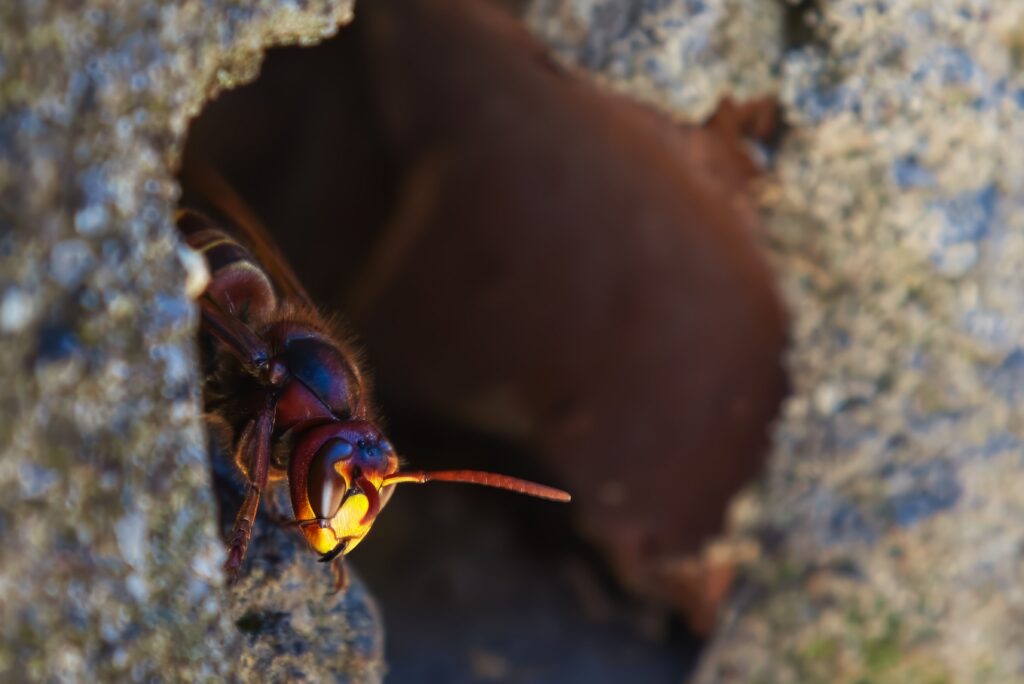
Large, black-and-white hornets that build aerial nests in trees or on buildings; extremely territorial and aggressive
Solitary wasps that build tube-like mud nests; generally non-aggressive and rarely sting
Our trained specialists begin with a thorough inspection to identify the wasp or hornet species, locate hives or nesting areas, and assess entry points around your property.
We use safe, targeted wasp and hornet pest control treatments to eliminate and remove nests, using professional-grade products and techniques to ensure the entire colony is neutralized – especially important for aggressive species like yellowjackets and hornets.
We seal cracks, vents, and other potential entryways to prevent future nesting, and offer guidance on reducing attractants such as food waste, standing water, or exposed shelter areas.
We provide scheduled wasp and hornet pest control treatments that proactively defend your home, reduce the risk of surprise infestations, and ensure long-term peace of mind.
We use species-specific wasp and hornet pest control techniques tailored to the type and severity of infestation. This includes applying targeted insecticides directly to nests, whether aerial, underground, or hidden in walls, and ensuring full colony elimination. For high-risk or aggressive species like yellowjackets and bald-faced hornets, we use protective equipment and specialized treatments to ensure safe exclusion.
We also identify and seal entry points such as roof eaves, soffits, vents, and cracks around windows or siding to prevent future nesting.
Guaranteed Results: If wasps or hornets return between scheduled treatments, we’ll come back and resolve the issue promptly. Our commitment to safe, lasting wasp and hornet pest control sets us apart from the rest.
Wasp and hornet pest control, treatment, and prevention requires professional expertise, protective gear, and safe treatment methods to eliminate the nest and prevent future infestations. Unlike bees, relocation isn’t typically an option – these pests are usually exterminated due to their aggressive nature and lack of pollinator value.
On average, wasp and hornet treatment typically ranges from $150 to $600, depending on the species, nest size, and location (e.g. underground, inside walls, or high up on structures). Additional costs may apply for emergency service, structural repairs, or preventative treatments to keep them from returning.


Our team is certified by the Department of Natural Resources (DNR) in Indiana, ensuring that our wasp & hornet control and treatment practices are ethical, legal, and environmentally responsible.
We stand by the effectiveness of our services with a guarantee for a set price. No hidden fees or surprises.
If additional sealing or work is needed, it’s included in our quote — no surprise charges or hidden fees.
We’ve been serving the Indianapolis community since 2018, and we understand the unique challenges posed by various critters.
When you contact us, you can count on a quick and efficient response to address your wasp and hornet issues.
A lot of Indianapolis homes are 50+ years old — older, historic homes with Victorian molding, slate roofs, clay tile roofs, and tighter neighborhoods where homes are close together. If the upkeep hasn’t been there, those homes are prime opportunity for raccoons. On the north and northeast side — Fishers, Carmel, Westfield — it’s newer builds and subdivisions, but they have their own issues: natural separation points in how the homes were built that wildlife can exploit. People aren’t building homes to keep wildlife out.
We serve a 15-mile radius from downtown Indianapolis, covering Marion County and surrounding suburbs.



AVAILABLE 24/7 • NO HIDDEN FEES